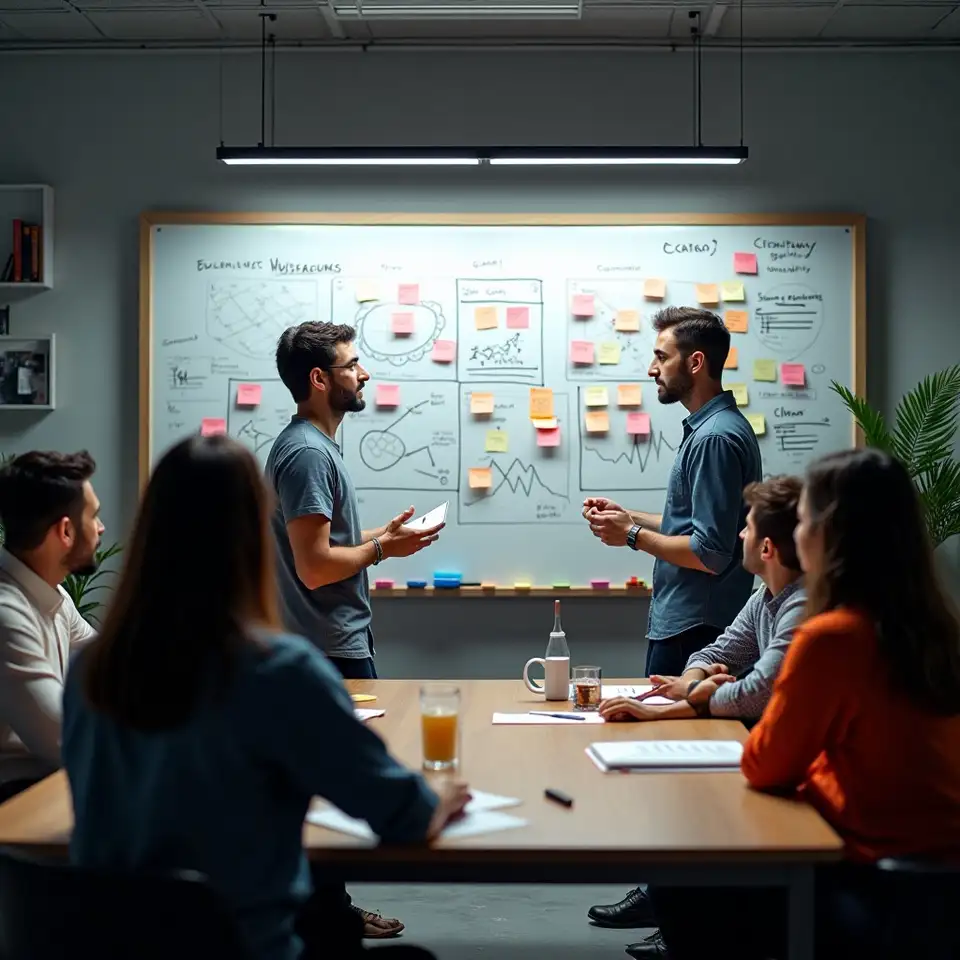

Team workshop mapping game economy systems

How I approach game economies.

Game economies used to be sketched on napkins and tuned by gut; I treat them as living histories written in numbers, reviews, and patch notes. This methodology grew from years of dissecting how virtual currencies, reward loops, and shops behaved once real players arrived. It blends structured analysis with hands on design sessions, giving your team a repeatable way to read what the economy is doing, decide how you want it to feel, and adjust without tearing the whole system apart every update.
  1. 01

    I start by collecting everything that already exists; spreadsheets, dashboards, design docs, and live captures. This archive reveals how past decisions layered up over time, exposing hidden rules and contradictions inside your current economy.

  2. 02
    Next I trace how currencies, items, and timers flow between activities, building diagrams that everyone can read. This shared map replaces hunches with a concrete picture of what your economy actually does in players’ hands.
  3. 03
    With that map in place, we design small, testable changes to pacing, rewards, or offers, framing them as hypotheses. Each experiment is sized to your pipeline so it can run alongside ongoing content work.
  4. 04
    Finally we observe what happens in data and community channels, then fold those lessons back into the model. Over time this loop becomes a ritual your team can repeat whenever the economy drifts.

A methodology built on player first economics, clear trade offs, and respect for live teams

How a project unfolds over time

A typical collaboration moves from understanding what exists to carefully adjusting it under live conditions, always looping new insight back into your team’s own playbooks.
01
[Phase]

Initial discovery and alignment

At the outset we focus on understanding your current reality. I gather economy artefacts, review available data, and run interviews with key team members to surface unwritten rules. By the end of this phase you have a shared snapshot of how currencies, rewards, and offers actually function for players today, not just how they were originally planned.

02
[Phase]

Economy mapping and prioritisation

Next I translate that snapshot into diagrams and lightweight models, highlighting where sources, sinks, and progression curves intersect. We identify sensitive pressure points, such as late game bottlenecks or confusing currency roles, and agree on which areas to address first based on impact and implementation effort.

03
[Phase]

Experiment design and implementation support

With priorities set, we co design experiments; for example, new reward pacing, revised store presentation, or clearer acquisition paths for key items. Each experiment is defined with expected player feelings, relevant metrics, and guardrails, so live teams know how to deploy changes without disrupting ongoing content work.

04
[Phase]

Measurement, tuning, and documentation

After changes go live, we monitor cohorts, sentiment, and operational impact over a defined window. Regular check ins turn raw numbers into stories about how players are responding, and we adjust parameters or communication as needed. The insights from this phase feed back into your documentation and inform future roadmap decisions.

From first audit to ongoing practice

Under the hood, this methodology is a loop; observe, model, experiment, review, and document. Each pass deepens your understanding of how the economy behaves in the wild and makes the next round of tuning less risky.

Audit current economy state

I review your existing economy artefacts, telemetry snapshots, and player feedback to understand how currencies, items, and progression currently behave. The goal is to translate scattered documents into a coherent picture of where friction, hoarding, or confusion show up for different cohorts.

Build economy models

Using that picture, I construct simplified models of your core loops, including sources, sinks, and key conversion points. These models let us explore what happens when parameters move, revealing sensitive spots where small changes can have outsized impact on progression or sentiment.

Shape targeted experiments

I then design a set of focused experiments, such as adjusting reward cadence, revising store layout, or clarifying currency roles. Each experiment is framed as a hypothesis with observable signals, making it easier for your team to implement, track, and, if needed, roll back.

Analyse cohorts and impact

Once experiments are live, I help your team interpret cohort data, review sentiment shifts, and compare outcomes against expectations. Together we decide which changes to keep, refine, or retire, documenting the reasoning so future decisions can build on this foundation.

Document and operationalise

Finally, I package the findings into practical artefacts; updated diagrams, parameter lists, and tuning guidelines that your team can maintain. This step turns one off work into a living reference that supports future content drops and seasonal planning.

How to prepare your team and build for this methodology

Prepare economy materials and access

Before any engagement, align internally on what you can realistically share; economy spreadsheets, anonymised dashboards, and current design docs help avoid guesswork. Having a single point of contact who can coordinate access saves time and keeps sensitive information handled consistently across the collaboration.

Include cross functional voices early

Bring representatives from design, analytics, product, and community into the first workshops so each perspective is heard. Many economy issues hide at the intersection of these roles, and early cross functional discussion reduces later surprises when experiments touch progression, offers, or messaging.

Plan around your release cadence

If possible, stabilise your build for a short window around experiments so signal is not drowned out by unrelated changes. Even when roadmaps are busy, agreeing on which updates might affect the same metrics helps interpret results and prevents overreacting to noise in the data.

Curate player feedback alongside data

Collect a small, representative set of player feedback, such as reviews, tickets, and community threads, tagged by theme before we begin. Pairing these qualitative snapshots with metrics gives a richer picture of how the economy feels, making it easier to judge whether a proposed tweak supports your long term relationship with players.

Set up a home for economy learnings

Decide in advance how you will capture and share learnings internally, whether through a living document, internal talks, or annotated diagrams. Treating the engagement as the start of an ongoing economy practice, rather than a one time fix, helps your team keep improving long after the initial review ends.

Next steps for your game

Turn this methodology into a concrete engagement

If this approach matches how you like to work, the next move is simple; bring a snapshot of your current economy, be honest about where it hurts, and we will decide together what a focused collaboration could look like.
Share where your economy currently feels off, attach a quick snapshot of your store or progression, and we can explore whether this methodology is the right fit for your next release or live update.

Cookie settings

This site uses cookies and similar technologies to keep the site working, understand traffic, and improve content; you can choose to accept or reject non essential cookies at any time through this banner or your browser settings.